Tuesday, October 13, 2009

Richard Seymour and Dick Powell: Designing dream machines

This video featuring Dick Powell and Richard Seymour opens the doors on the on the processes and methods of design which we as budding industrial designers will be exposed to in our future careers whatever they may be. The video highlights the variety of areas throughout the design and manufacturing process where the designer plays a major role.
Some of the issues highlighted within this video focus on the ways a designer can satisfy not only the people they work with such as the engineers but also their target market and the consumer. 
In my opinion this video is important for us as industrial designers as it highlights the limitations we will have within our work and how we can truly work with others to perfect our final piece of work.

Image

Tuesday, October 6, 2009

Annie Leonard: The Story of Stuff

The figures shown within this video by Annie Leonard are so absurd that I’m almost tempted to call her bluff. But then again, so what if some of them are a little exaggerated in order to enhance shock value? It really does seem that our world has got to the point where change can only take place after we’re scared into it by someone else. Annie’s The Story of Stuff is very reminiscent of Al Gores, An Inconvenient Truth however it only focuses solely on the production of todays consumer products and the affects they have on our world and us.

The linear system of production in the way it’s shown by the textbooks seems to work perfectly with no downsides but unfortunately this isn’t the truth. You “cannot run a linear system on a finite planet indefinitely” because the system hits limits such as societies and the people forming those societies.

Since the introduction of the mass consumerism explained by Annie, a power shift has shown the corporations take control of the governments while the people with nothing have absolutely no say in what is going in. You now cannot possess power or importance unless you buy or own mass quantities. As usual money is key, and it’s money, which have led to the depletion of resources and quality of life for humans around the world. Everyone mentioned within the video is driven by the need for more cash which can be seen not only with the government giving in to the corporations but also the 200000 people per day around the world who are forced to leave their homes and move to cities in search for work no matter how terrible the working conditions are.

It’s obvious that Industrial design has played a major role in pushing the world to its current position. And in order to get out of this ditch we’ve ended up in, the world and it’s societies will have to work together to reverse the damage and work together for a more sustainable future in which the world can prosper without its resources (and civilisations) running dry. 

For industrial designers, the moral question now exists as to whether we should abandon planned and perceived obsolescence and risk our future jobs, or keep it going and risk out future lives. In my opinion it’s an easy choice. Why ruin the world for generations to come simply to put ourselves and our own needs ahead? If the building in of obsolescence is to continue then it should at least be with materials which can be completely upcycled or those which can be disposed of without doing any further damage to anyone on this beautiful planet of ours.

Video: http://storyofstuff.com/

Image: http://graphics8.nytimes.com/images/2009/05/11/education/11stuff4.inline.jpg

Monday, September 28, 2009

Postal Presents - Curve Organiser

Instruction Sheet:


Cutting Diagram:


Exploded View:
 Isometric Drawing:


Rationale:
This project began with the identification of the need for a pencil and pen organiser, which could bring pleasure and comfort to its user. Unlike similar products, I was looking to design something, which would not be an intrusive eyesore on the desktop. Sent as a gift, such an object could provide enjoyment in many forms both due to its functional and aesthetic qualities.

It’s this balance of function and aesthetics, which sets the Curve Organiser apart from the other common desktop organisers. The Curve is designed to organise stationery horizontally rather than vertically. This allows for ease of use when searching for certain objects. This also gives the user the ability to store their stationery in a variety of positions such as a North-South orientation or even East-West.

A variety of different design solutions were tested through both models and sketches. The array of ideas compiled allowed for experimentation and research, which in turn helped decide on the target markets favourite design. In the end, this specific design was chosen for its balance and simplicity. The smooth curved form of the organiser makes it inviting and pleasant. The user is enticed into using it and wants to have it around for others to see. It’s a gift that the receiver can be proud to show off.

The pleasure experienced during the construction of the Curve comes from the fact that the receiver of the gift sees the product take shape a little more with each and every piece. Over time the 22 pieces come together to form one unified product. Even once constructed, the Curve Organiser continues to be pleasurable as it can be used day after day after day.

The Curve is constructed using laser cut acrylic perspex and extruded perspex rod. The 6mm thick Perspex allows the main body of the Curve to fit within a C4 envelope in its 2D form. This material also provides for a sturdy construction, which is more than strong enough for the specified task. Laser cutting was chosen as the process to make this model as it’s very accurate and suits the design perfectly. By submitting a .DXF file produced in AutoCAD I was able to receive the results quickly and with a far greater level of precision than I would have been able to produce myself.

The Curve Organiser is a great example of putting a two-dimensional sheet material to use, in order to form a smooth, free flowing three-dimensional product, which can be enjoyed every single day.

Peer Comment:
Kiran Kashyap
Emily Soares
Nicholas Walker
Stanley Wong
Alfred Boyadgis

Finished Product:


Monday, September 21, 2009

Ross Lovegrove: The Power and Beauty of Organic Design

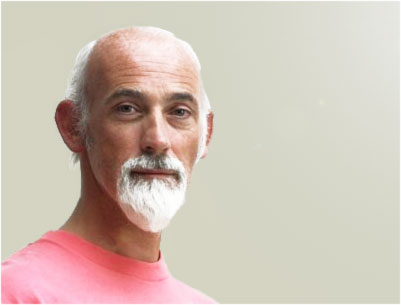
To be honest, I got really tired of listening to the self-professed “Captain Organic” talking about himself and his work and his studio. He may be good at what he does, but I can think of many better ways to spend my time. I do however admire his ambition and his method of instinctive design. He stated that “instinct plays a huge role in design” and I couldn’t agree more. In some cases, our instinct will tell us what’s best and in my opinion, maybe some times we should leave it at that and move on. Sometimes, adding thought to an idea can only lessen its aesthetic appeal and functional properties.

Of the products displayed within the video, Ross Lovegroves water bottle had to be my favourite. When first seeing his “representation of water” I laughed a little and couldn’t help but wonder where he was taking me. “What could these squiggly lines on a page possibly lead to?” The journey however, was fascinating. Seeing that shape come to life and to eventually form the final product was incredible. His bottle really does manage to capture water in its most beautiful, organic state. 

Nature designs with necessity in mind. It liberates form and strips it to the bare essentials. Lovegroves scientific approach to design and its form was enlightening. He can take something like a molecular structure and use it as the basis for a piece of furniture, which fits necessity first and foremost. There are no added extras or decorations. It’s just the bare essentials, as if it were created through millions of years of evolution like the dinosaurs. “I make organic things, which are essential.”

For industrial designers, this video provides an insight into the direction we should be heading in terms of design and material choices as resource levels dip to new lows. Organic design has the ability to leave a smaller environmental footprint than other methods of design while still producing designs which are the same, if not more beautiful. It’s great to see these pioneers such as Ross who are looking into Biopolymers and even foodstuffs and forcing them upon multinational corporations (even if they ignore him).

“Could we be manufacturing from food stuffs in the future?” My fingers are crossed and I’m hoping the answer is “Yes”. We’ll have a delicious future on our hands (and faces) if Captain Organic has his way.

Image: http://www.designboom.com/eng/interview/lovegrove/dbportrait.jpg

Monday, September 14, 2009

Bad Design


The NOKIA 6500 Slide phone was chosen for the bad design task due to an improperly labeled and badly position power button. To the inexperienced (and experienced) mobile phone user, the power button appears to not exist as it lacks the design features to draw attention. Many users would expect to see a power button along the top ridge of the phone, however the only button to be found there removes the rear cover. The actual power button, in fact is combined with the end call button, however no design effort was made to show this. 

My proposed change involves simply placing a separate power button on the top of the phone. The issue of it not standing out amongst other buttons would be solved by printing a power logo on the button in red to grab the users attention.