Showing posts with label Video Reflection. Show all posts

Thursday, May 26, 2011

Ethical Design Issues

The whole time I watced Design for Life I couldn't help but wonder how these people were selected and where they came from. Their lack of initiative and work ethic was very poor on their part to the point where I was actually a little embarassed. And sadly as bad as it seems, I was reminded of myself in some of my previous project where I really didn't have an urge to design or get things done. But given the opportunity to work with Phillipe Starck I know things would be different. Presented with such an opporunity, I know I would work to my full potential just to gain the experiences and fully embrace the opportunity presented to me.

Design for Life as a television show was an interesting one for me despite certain parts such as some of the presentations as it really showed me the world of design in a different perspective. It showed me how others react to certain stimuli and their work process because while what I learn is one thing, they know something completely different and while it's all design, it's all different. 

I wouldn't say I really enjoyed all of the episodes but it was insightful and while showing errors in the participants ways, it highlighted errors in my ways and has actually inspired me to not work in that way.

Wednesday, March 23, 2011

Sustainable Consumption

Annie Leonard's story of stuff videos never cease to enlighten me. Even the simplest things in life like like bottled water does so much unknown damage and no one even seems to mind because it doesn't directly affect their way of life.
 
I must admit that after watching both the story of bottled water and the story of electronics, I realised that I, like most play a role in that sort of behaviour. While I've always been of the opinion that tap water tastes better than bottled water, I'd been a victim of clever marketing and had myself convinced that the bottled water was somehow healthier. For this reason I'd always finding myself carrying around bottled water due to convenience and the assumed nutritional difference.
 
While I'd always believed that the price of bottled water was to do with the convenience of the product I'd never come to the conclusion that it was up to 2000 times the price of typical tap water and the real comparison to other products played a great part in solidifying the need for a change in my habits when it comes to buying bottled water.
 
The issue of design for the dump and planned obsolescence is one which I come across far too often as the quality of electronics just seems to be lowering and lowering as new models continue to arrive. Working in retail and selling electronics designed for home offices has really enlightened me on the issues and damage being caused by products and their marketing. None as much as the common inkjet printer though. If the fact that these printed barely last longer than the 1 year warranty they're sold with isn't enough, they're mostly cheaper than the ink cartridges used to run them and this causes the most disturbing issue I see. Customers constantly coming into the store to buy ink refills and leaving with a whole new printer because it was cheaper. The way these products are design and marketed makes is near impossible to convince a customer otherwise as they don't understand the environmental impact of their actions.
 
This idea of manufactured design is something I'm not a fan of but also can't help but play a part in. Industrial designers who work for such companies are simply doing their job and just like the consumers buying their products, they're not seeing the full impact of their actions. I'd like to say I'm going to think more before purchasing new electronic products and try to keep them until they actually stop working but chances are that I won't. It's at least a comforting start knowing that I have Annie Leonard's words playing over in my head reminding me of what I'm doing to someones life elsewhere in the world.

Video:
www.storyofelectronics.com
www.storyofbottledwater.com

Wednesday, March 16, 2011

Recycling: Giving Packaging a New Life

Recycling is by no means a new concept to the developed world but unfortunately, with humans it has always been a case of "out of sight, out of mind". The majority of us stop feeling bad about our waste as soon as someone else has collected it. It's for this exact reason that while the technology used to perform the recycling process has existed for at least the past decade, we are still not taking responsibility for the recycling and reuse of our everyday waste.

"Giving Packaging a New Life" is a video series which highlights the ways in which all different materials are sorted and processed in order to be given a new life as a recycled product. It's a display of the technology at work behind the scenes trying to  save us from ourselves and save us from the already mountain high piles of trash which cover our planet.

While recycling gives new life to old products that we no longer have a use for, it's also a process which can be very damaging to the environment. It's for this reason that recycling certainly doesn't come without a cost. The large machinery used to sort, break down and reuse the recycled materials all use a large amount of energy throughout the entire process.

Being an industrial design student at this point in time, I feel that I've inherited all the damage that we've done to our planet over the past few centuries. While it comes as a bit of a burden, it's also a wake up call for something to be done. Not only do products need to be more environmentally friendly and easier to recycle, but theres also room to improve the recycling infrastructure to both have a lesser impact on the environment and to make the process one which more people follow and adhere to for generations to come.

Tuesday, October 13, 2009

Richard Seymour and Dick Powell: Designing dream machines

This video featuring Dick Powell and Richard Seymour opens the doors on the on the processes and methods of design which we as budding industrial designers will be exposed to in our future careers whatever they may be. The video highlights the variety of areas throughout the design and manufacturing process where the designer plays a major role.
Some of the issues highlighted within this video focus on the ways a designer can satisfy not only the people they work with such as the engineers but also their target market and the consumer. 
In my opinion this video is important for us as industrial designers as it highlights the limitations we will have within our work and how we can truly work with others to perfect our final piece of work.

Image

Tuesday, October 6, 2009

Annie Leonard: The Story of Stuff

The figures shown within this video by Annie Leonard are so absurd that I’m almost tempted to call her bluff. But then again, so what if some of them are a little exaggerated in order to enhance shock value? It really does seem that our world has got to the point where change can only take place after we’re scared into it by someone else. Annie’s The Story of Stuff is very reminiscent of Al Gores, An Inconvenient Truth however it only focuses solely on the production of todays consumer products and the affects they have on our world and us.

The linear system of production in the way it’s shown by the textbooks seems to work perfectly with no downsides but unfortunately this isn’t the truth. You “cannot run a linear system on a finite planet indefinitely” because the system hits limits such as societies and the people forming those societies.

Since the introduction of the mass consumerism explained by Annie, a power shift has shown the corporations take control of the governments while the people with nothing have absolutely no say in what is going in. You now cannot possess power or importance unless you buy or own mass quantities. As usual money is key, and it’s money, which have led to the depletion of resources and quality of life for humans around the world. Everyone mentioned within the video is driven by the need for more cash which can be seen not only with the government giving in to the corporations but also the 200000 people per day around the world who are forced to leave their homes and move to cities in search for work no matter how terrible the working conditions are.

It’s obvious that Industrial design has played a major role in pushing the world to its current position. And in order to get out of this ditch we’ve ended up in, the world and it’s societies will have to work together to reverse the damage and work together for a more sustainable future in which the world can prosper without its resources (and civilisations) running dry. 

For industrial designers, the moral question now exists as to whether we should abandon planned and perceived obsolescence and risk our future jobs, or keep it going and risk out future lives. In my opinion it’s an easy choice. Why ruin the world for generations to come simply to put ourselves and our own needs ahead? If the building in of obsolescence is to continue then it should at least be with materials which can be completely upcycled or those which can be disposed of without doing any further damage to anyone on this beautiful planet of ours.

Video: http://storyofstuff.com/

Image: http://graphics8.nytimes.com/images/2009/05/11/education/11stuff4.inline.jpg

Monday, September 21, 2009

Ross Lovegrove: The Power and Beauty of Organic Design

To be honest, I got really tired of listening to the self-professed “Captain Organic” talking about himself and his work and his studio. He may be good at what he does, but I can think of many better ways to spend my time. I do however admire his ambition and his method of instinctive design. He stated that “instinct plays a huge role in design” and I couldn’t agree more. In some cases, our instinct will tell us what’s best and in my opinion, maybe some times we should leave it at that and move on. Sometimes, adding thought to an idea can only lessen its aesthetic appeal and functional properties.

Of the products displayed within the video, Ross Lovegroves water bottle had to be my favourite. When first seeing his “representation of water” I laughed a little and couldn’t help but wonder where he was taking me. “What could these squiggly lines on a page possibly lead to?” The journey however, was fascinating. Seeing that shape come to life and to eventually form the final product was incredible. His bottle really does manage to capture water in its most beautiful, organic state. 

Nature designs with necessity in mind. It liberates form and strips it to the bare essentials. Lovegroves scientific approach to design and its form was enlightening. He can take something like a molecular structure and use it as the basis for a piece of furniture, which fits necessity first and foremost. There are no added extras or decorations. It’s just the bare essentials, as if it were created through millions of years of evolution like the dinosaurs. “I make organic things, which are essential.”

For industrial designers, this video provides an insight into the direction we should be heading in terms of design and material choices as resource levels dip to new lows. Organic design has the ability to leave a smaller environmental footprint than other methods of design while still producing designs which are the same, if not more beautiful. It’s great to see these pioneers such as Ross who are looking into Biopolymers and even foodstuffs and forcing them upon multinational corporations (even if they ignore him).

“Could we be manufacturing from food stuffs in the future?” My fingers are crossed and I’m hoping the answer is “Yes”. We’ll have a delicious future on our hands (and faces) if Captain Organic has his way.

Image: http://www.designboom.com/eng/interview/lovegrove/dbportrait.jpg

Sunday, August 23, 2009

Yves Behar: Creating Objects that tell stories


“Storytelling has been a really strong influence in my work”. - Yves Behar.

After leaving design school Behar began questioning what was truly necessary. A good example of this being the presence of the num lock key on today’s keyboards despite the fact that many people have no idea what its purpose is. He noticed that the guys in Silicon Valley we’re not interested in changing what’s on the inside and more rather wanted to make changes to the outside. They only wanted to create beauty on the outside of the box. This lead Behar to move off on his own. His interest was to design the entire human experience in to a product and not just the exterior. He aimed to make technology humble in an attempt to help the user interact with the product.

The Y water bottle was definitely a stand out favourite for me. I could not see a single thing wrong with it. The fact that this healthy alternative to soft drink can be served in this creative packaging, then after use become a collectible toy is something that I love. If this product had been around during my childhood, I’m sure my drinking habits would have been far healthier. I know that if I got my hands on one or two of those bottles and saw the potential I’d just want to keep collecting and creating.

The shape shifting light fixture really helped me to see the closing gap between technology and its user. It’s incredible that simple by touching a small screen and creating a personalised shape, the light would rearrange itself to fit the users preference.

In my opinion, it’s important for designers to see this video, as they need to understand that design isn’t simply making something look better. Design is the glue which beings a variety of values together in order to form the products overall value. The
Jawbone bluetooth headset for example was designed from the ground up. It had to not only work well but in order to appeal to a more stylish market, it had to look like it belonged on the side of your face. This video highlights design not only from an aesthetic aspect but also from technical aspect. It helps us understand all the work that needs to go into a product during the design process.

Image:
http://farm1.static.flickr.com/232/519394574_1bce663eb2_o.jpg

Video:
http://www.youtube.com/watch?v=QGn8F4j6pH8

Tuesday, August 18, 2009

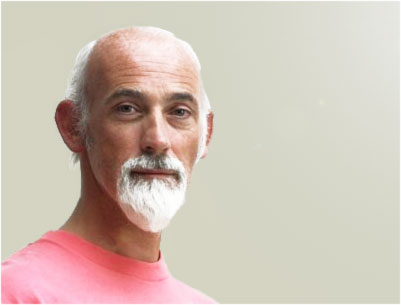
Don Norman: Emotional Design

Don Norman speaks of a change that he has made and maybe one that needs to be embraced by more designers. He's no longer focusing on designs being purely functional. It's not all that matters. His new life is beauty.

After seeing Philippe Starcks gold plated juicer, I’ve realized that a design doesn't even have to work or perform its usual function to be successful. The juicer for example gives instruction specifically to make sure the user does not make juice with it. Therefore making this particular piece of design more of a centerpiece than anything else. It's more of a conversation starter at a dinner table. And you know what. I love it. I've always just expected that designs need to work but after seeing the work of Philippe Starck I disagree. Who says something has to perform to its expectations? In the world of design a little surprise can be a good thing.

As humans, the customers and users of products connect with the emotional aspects as shown with the Jake Cress chair, which has lost its ball. We all see it as a chair however we can easily being ourselves to believe this story about how the chair has lost its ball and is trying to get it back.


The reason I believe Don Normans video should be viewed by Industrial designers may be oblivious to beauty as Don mentioned he was. With this video he is speaking of his change in perspective and the importance of style and beauty within a design.


Image: http://www.imperial.ac.uk/publications/reporterarchive/images/photos/0068/dnormanp2.jpg


Video: http://www.youtube.com/watch?v=RlQEoJaLQRA